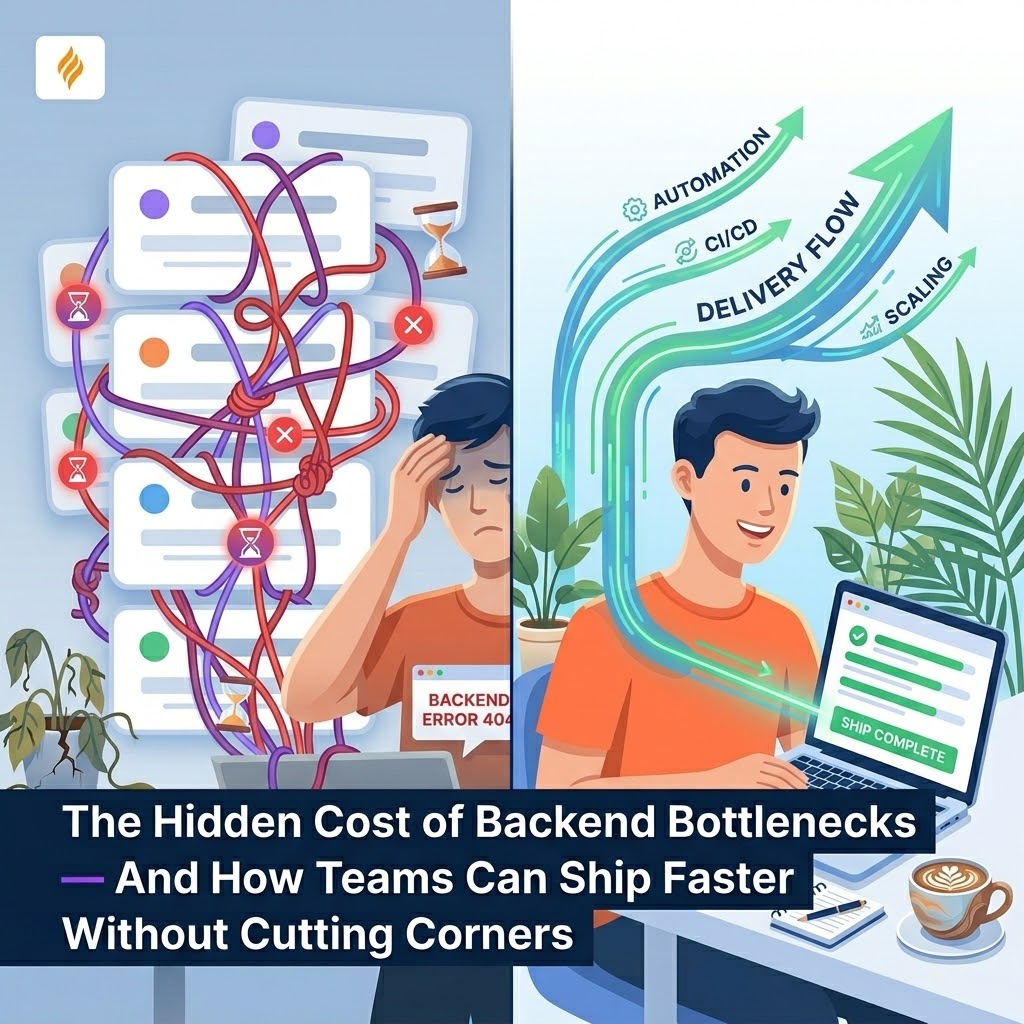
Toda empresa en crecimiento dice que quiere avanzar más rápido. Todo equipo de desarrollo dice que necesita más tiempo de concentración. Y, sin embargo, en muchas organizaciones, el trabajo de backend se convierte en un cuello de botella silencioso que ralentiza a todos.
No porque los ingenieros carezcan de talento. No porque los equipos de producto carezcan de ideas. Sino porque demasiada energía queda atrapada en tareas repetitivas de infraestructura: definir endpoints CRUD, validar payloads, gestionar reglas de acceso, versionar APIs, documentar el comportamiento y mantener entornos consistentes.
¿Te suena familiar?
Para las empresas, esto crea un problema muy real: el tiempo de comercialización se alarga, la deuda técnica crece y la atención de ingeniería se desvía de las características que realmente diferencian el producto. Para los desarrolladores, puede ser aún más frustrante. Quieres resolver problemas significativos, pero en cambio pasas horas conectando cosas que ya deberían estar resueltas.
Ese es exactamente el tipo de fricción que Igniral está diseñado para eliminar.
Cuando el Trabajo de Backend se Convierte en Riesgo Empresarial
Llamemos al problema por su nombre: la configuración de backend a menudo se trata como un detalle técnico, cuando en realidad es una restricción empresarial.
Una empresa puede tener una visión de producto sólida, un equipo capaz y una demanda de mercado validada. Pero si cada nueva herramienta interna, prototipo o función orientada al cliente requiere el mismo ciclo lento de modelado de backend, implementación, configuración de acceso y documentación, el impulso se desvanece. Los equipos comienzan a negociar el alcance no en función del valor para el cliente, sino de lo que pueden construir de manera realista a tiempo.
Aquí es donde aparece el costo:
| Problema | Impacto Empresarial | Impacto en el Desarrollador |
|---|---|---|
| Reconstruir APIs estándar repetidamente | Lanzamientos más lentos | Menos tiempo para la lógica principal |
| Manejo inconsistente de esquemas | Problemas de calidad de datos | Más depuración |
| Documentación manual | Desalineación entre equipos | Carga de mantenimiento adicional |
| Configuración de seguridad ad hoc | Mayores riesgos de cumplimiento y acceso | Mayor sobrecarga operativa |
| Flujos de trabajo de migración/exportación dolorosos | Ansiedad por el bloqueo de proveedores o entornos | Procesos de lanzamiento frágiles |
Esto no es solo una inconveniencia de ingeniería. Afecta las oportunidades de ingresos, la experiencia del cliente y la confianza interna.
Los equipos que ganan no son siempre los que escriben más código. A menudo, son los que eliminan el trabajo más innecesario.
El Patrón que Muchos Equipos Conocen Demasiado Bien
Un gerente de producto solicita una nueva función. El equipo de ingeniería la estima. La lógica empresarial real puede ser sencilla, pero la lista de verificación de backend se expande rápidamente:
- Crear un servicio o límite de aplicación
- Definir modelos de datos y esquemas de validación
- Exponer endpoints REST
- Configurar políticas de autenticación y acceso
- Publicar documentación OpenAPI/Swagger
- Probar la implementación
- Prepararse para futuras versiones
- Pensar en copias de seguridad y migración
Ninguno de estos pasos es intrínsecamente malo. De hecho, importan. El problema es que a menudo se repiten manualmente en proyectos, entornos y equipos.
Esa repetición crea arrastre.
Y el arrastre es peligroso porque se esconde a plena vista. Un sprint se retrasa aquí. Un prototipo se retrasa allá. Un equipo pospone una herramienta interna útil porque "es demasiado esfuerzo de backend por ahora". Con el tiempo, la organización se vuelve más lenta de lo necesario.
Lo que Igniral Cambia
Igniral simplifica el desarrollo de backend al permitir que los equipos diseñen, implementen y gestionen APIs REST listas para producción de forma visual. En lugar de empezar por la infraestructura y la fontanería, empiezas por lo que realmente importa: tu modelo de datos y la lógica que lo rodea.
El flujo de trabajo es intencionalmente simple:
- Define una estructura de aplicación para agrupar recursos relacionados y gestionar configuraciones.
- Diseña esquemas visualmente en el Schema Builder, o genéralos instantáneamente utilizando herramientas de IA de prompt a esquema.
- Implementa y obtén endpoints en vivo y de alto rendimiento al instante.
- Asegura el acceso con controles granulares y políticas de seguridad flexibles.
Esto importa porque comprime la distancia entre la idea y la API utilizable.
Si estás construyendo un prototipo o un MVP SaaS, eso significa una validación más rápida. Si estás creando un servicio interno, eso significa menos fricción de configuración. Si estás lanzando un microservicio escalable, eso significa que tu equipo puede dedicar más esfuerzo a la fiabilidad, la lógica de dominio y el valor para el cliente en lugar de al andamiaje repetitivo de la API.
Un Ejemplo Práctico
Imagina una empresa lanzando un nuevo módulo de inventario. Tradicionalmente, el equipo podría pasar días o semanas configurando esquemas, rutas CRUD, validación, configuraciones de entorno y documentación antes de que los stakeholders puedan siquiera probar el flujo de trabajo.
Con Igniral, el equipo puede crear una aplicación como inventory-management, definir esquemas para productos, movimientos de stock y proveedores, y obtener endpoints funcionales mucho más rápido.
Un esquema podría verse conceptualmente así:
{
  "name": "Wireless Mouse",
  "sku": "WM-2048",
  "price": 29.99,
  "is_active": true
}
El Schema Builder de Igniral también ayuda con la inferencia inteligente de tipos, sugiriendo tipos de campo probables basados en nombres como:
email→ cadena con formato de correo electrónicocreated_atodob→ cadena con formato de fecha y horais_active→ booleanoprice→ númerocountoage→ entero
Esto puede sonar como una pequeña conveniencia, pero las pequeñas conveniencias se suman. Reducen los errores de configuración, aceleran el modelado y crean más consistencia entre los equipos.
Por Qué Esto Importa a los Desarrolladores
Seamos honestos: la mayoría de los desarrolladores no se entusiasman con reescribir lógica de endpoint boilerplate por décima vez.
Lo que les importa es construir sistemas limpios, útiles y fiables. Les importa resolver problemas de dominio, no reinventar repetidamente la misma mecánica de backend.
Igniral respeta esa realidad.
Al generar automáticamente APIs REST listas para producción a partir de definiciones de esquemas visuales, ayuda a los desarrolladores a recuperar tiempo para el trabajo que realmente requiere juicio de ingeniería:
- Diseñar mejores flujos de datos y lógica compleja
- Mejorar el rendimiento orientado al usuario y la fidelidad del frontend
- Implementar reglas de negocio específicas y límites de servicio
- Conectar agentes de IA directamente a esquemas de backend utilizando el servidor nativo Igniral Model Context Protocol (MCP)
- Colaborar de manera más efectiva con producto y operaciones
Y dado que las aplicaciones en Igniral incluyen versionado, los equipos pueden gestionar el ciclo de vida de la API de forma más deliberada. Lanzar v2 sin romper a los consumidores existentes no es un problema de "ya lo resolveremos más tarde", se convierte en parte de un flujo de trabajo más limpio desde el principio.
Ese tipo de previsibilidad genera confianza. Y la confianza cambia el comportamiento del equipo. Las personas envían más de forma decisiva cuando confían en la plataforma que tienen debajo.
Por Qué Esto Importa a las Empresas
Para las empresas, el valor es mayor que la simple velocidad.
Sí, la entrega más rápida importa. Pero la ventaja más profunda es el enfoque. Cuando la infraestructura de backend se vuelve más fácil de diseñar, implementar y gestionar, las organizaciones pueden dedicar más recursos a la diferenciación en lugar de a la repetición.
Eso crea beneficios en múltiples niveles:
1. Experimentación más rápida
Nuevos productos, MVPs SaaS y herramientas internas se pueden probar antes, con un costo de configuración mínimo.
2. Mejor consistencia operativa
Los esquemas, las reglas de acceso y el comportamiento de los endpoints se estandarizan. Las especificaciones OpenAPI de autogeneración de documentación se generan automáticamente.
3. Menor sobrecarga de coordinación
Producto, ingeniería y stakeholders no especialistas se alinean fácilmente cuando las APIs se estructuran visiblemente y se documentan automáticamente.
4. Reducción de la ansiedad por la migración
Igniral incluye soporte integral para exportación y migración de datos, lo que permite a los equipos descargar una instantánea completa de la aplicación como JSON. Esto incluye:
- Metadatos de la aplicación
- Definiciones de endpoints
- Registros de datos almacenados
- Metadatos de endpoints de archivos
- Resúmenes de exportación
Esto es especialmente importante en operaciones del mundo real. Antes de cambios importantes, antes de la eliminación de cuentas o al mover datos entre entornos, tener una ruta de exportación fiable no es solo conveniente, es responsable.
Seguridad y Gobernanza Sin la Fricción Habitual
La velocidad sin control es una trampa. Las empresas lo saben. Los desarrolladores también.
Es por eso que el modelo de aplicación de Igniral incluye sólidas características de seguridad y gobernanza:
- Modo Público o Privado: Configura la visibilidad de la aplicación a nivel raíz, lo que facilita restringir o compartir endpoints.
- Políticas de Seguridad Granulares:
- NINGUNA: Acceso abierto para roles.
- SOLO PROPIETARIO: Patrón estándar donde los usuarios solo acceden a los registros de datos que crearon (perfecto para datos de usuario personales).
- FILTRO DE RECLAMACIONES: Filtra dinámicamente las consultas a la base de datos basándose en las reclamaciones JWT (personalizable a través de
securityConfig).
- Almacenamiento Seguro de Archivos: Soporte para endpoints de carga de archivos con escaneo de malware integrado para evitar que payloads maliciosos lleguen a tu infraestructura.
- Estado Desactivado: Pausa instantáneamente todo el tráfico entrante para rechazar solicitudes inmediatamente si es necesario.
- Aislamiento y Pausas de Inquilinos: Pausa temporal de escritura durante las exportaciones para garantizar una consistencia transaccional perfecta.
Aquí hay un ejemplo simple de un patrón de solicitud autenticada que un equipo podría usar con una aplicación privada:
curl -H "Authorization: Bearer <jwt_token>" \
  https://api.example.com/v1/products
Corto, familiar, práctico. Ese es el punto. Igniral encaja en patrones que los desarrolladores ya entienden.
Una Mejor Manera de Trabajar Entre Equipos
Uno de los costos más subestimados en la entrega de software es la desalineación.
Ingeniería piensa que la API se comporta de una manera. Producto espera otra. QA prueba contra suposiciones desactualizadas. Operaciones se preocupa por los riesgos de lanzamiento. La documentación se queda atrás de la realidad. Todos hemos visto esto.
Cuando la creación de API es visual, estructurada y lista para implementar por diseño, la colaboración mejora de forma natural. Las personas tienen un punto de referencia compartido más claro. La confianza crece porque hay menos cosas ocultas en detalles de implementación personalizados.
Aquí es donde importa el lado humano.
Los equipos hacen su mejor trabajo cuando sienten impulso. Cuando pueden mostrar progreso rápidamente. Cuando no se disculpan constantemente por los retrasos causados por la fontanería. Una buena plataforma de backend no solo ahorra tiempo; mejora la moral. Devuelve a los equipos la sensación de que están construyendo, no solo manteniendo.
Y eso importa más de lo que muchos líderes se dan cuenta.
Lo Que Puedes Aplicar Hoy
Incluso si todavía estás evaluando tu estrategia de herramientas de backend, hay algunas lecciones prácticas que vale la pena aplicar de inmediato:
Audita tu trabajo repetitivo de backend
Pregunta a tu equipo:
- ¿Con qué frecuencia reconstruimos patrones CRUD estándar?
- ¿Cuánto tiempo se dedica a la configuración de validación y documentación?
- ¿Dónde se sienten arriesgadas las migraciones o exportaciones?
- ¿Qué proyectos se retrasan principalmente debido al andamiaje de backend?
Si el mismo dolor aparece repetidamente, es un problema de plataforma, no un problema de tarea aislada.
Estandariza primero en torno a los modelos de datos
Un enfoque claro de "esquema primero" reduce la ambigüedad y mejora la consistencia. Cuando los equipos definen la estructura desde el principio, todo lo que sigue se vuelve más fácil: validación, endpoints, documentación y colaboración.
Trata el versionado de API como una decisión de producto
El versionado no debe ser una ocurrencia tardía. Si tu plataforma admite una gestión de versiones limpia, úsala intencionalmente.
Reduce la fricción para los prototipos
No todas las ideas merecen semanas de configuración de backend. A veces, la forma más rápida de aprender es poner en marcha rápidamente una API segura y utilizable y validar la demanda.
La Verdadera Oportunidad
Está ocurriendo un cambio mayor en el desarrollo moderno: los equipos son cada vez más selectivos sobre dónde invierten el esfuerzo de ingeniería personalizado.
Eso es saludable.
No todo debe ser hecho a mano desde cero. De hecho, un signo de una organización de ingeniería madura es saber qué capas deben estandarizarse para que el equipo pueda invertir profundamente donde realmente importa.
Igniral habla directamente a esa oportunidad. Ayuda a las empresas y a los desarrolladores a pasar de la repetición de backend a la palanca de backend.
Y en un mercado donde la velocidad, la claridad y la fiabilidad importan, la palanca lo es todo.
Pensamiento Final
Si tu equipo todavía está perdiendo un tiempo valioso en la configuración repetitiva de backend, puede que no sea un problema de recursos. Puede ser un problema de herramientas.
Igniral ofrece un camino más práctico: diseña visualmente tus datos, implementa APIs REST listas para producción al instante, asegura el acceso de forma limpia y gestiona exportaciones y versiones con confianza.
Menos andamiaje. Más envíos. Menos fricción. Más enfoque.
Si ese suena como el tipo de cambio que tu equipo necesita, ahora es el momento adecuado para explorar la Documentación de Igniral y ver qué tan rápido puede ir tu próxima API desde la idea hasta la producción.